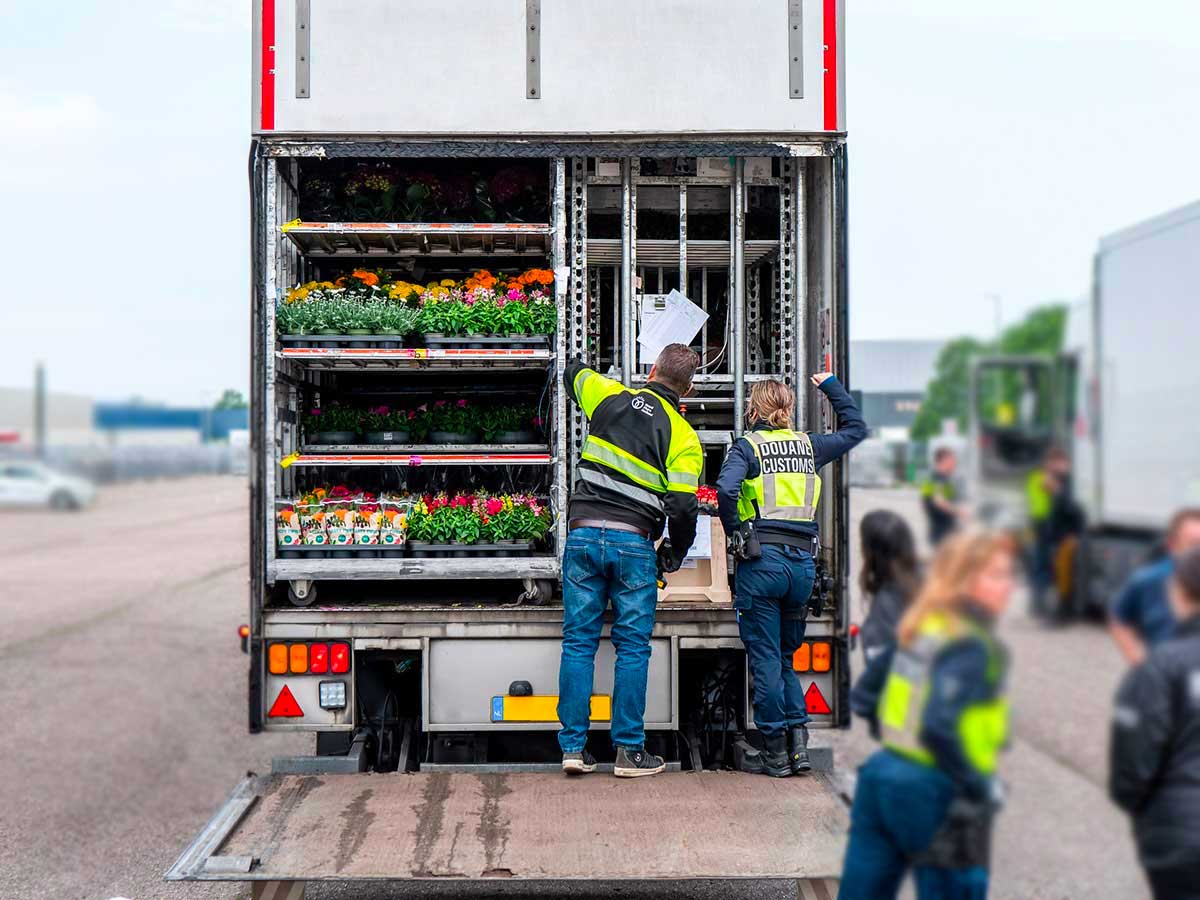

View of flower transport by sea freight
“Although most flowers still go via Schiphol Airport, expansion of transport via sea containers is increasingly coming into the picture. This is related to sustainability goals, innovation and cost reduction within ornamental horticulture. What does this mean for the vulnerability of Dutch seaports?”
Read more about the impact of narcotics smuggling in the ornamental plant transport sector in November’s Portscan (no. 5), a publication of Rotterdam Seaport Police. Transport via sea containers is still developing but in 2023, flowers and plants ranked fourth among export products via sea freight from Colombia, after bananas, coffee and avocados.
“The cocaine had been smuggled in some kind of tubes that looked like stems of roses. Those tubes were hollowed out and each tube contained about a hundred grams of coke. This is a smuggling variant that is not completely new, but one that is extremely difficult to spot.”
Because of its speed and good connections with the rest of Europe, the supply chain of ornamental horticulture constitutes a good opportunity structure for transit and export of drugs. That is why the floriculture sector, with the flower auction as a logistical hub, is included in the Mainport Program financed by the Ministry of Justice and Security. The Weerbare Sierteeltsector (Resilient Floriculture Sector) program, among other things, focuses strongly on prevention by making the sector resilient.